Showing posts with label dementia home care. Show all posts

Wednesday, January 27, 2021

Professional Elder Care Supports Family Caregivers

 If you provide care for a loved one living with age-related challenges or disabilities, you’re not alone. According to the National Alliance for Caregiving & AARP, around 44 million Americans act as family caregivers.

While such a considerable portion of the population is involved in providing unpaid assistance for those they love, these individuals rarely have the support they require to maintain their health and well-being. That’s why it’s crucial for family caregivers to have access to reliable, high-quality elder care services they can reach out to for assistance.

Many people view elder care as being primarily beneficial for older adults who need support with necessary activities of daily living. However, professional care providers also work to promote family caregivers’ well-being by giving them respite from their duties, relief from worry, and time to focus on their own self-care.

At Visiting Angels Newton/Canton, we’re proud to offer in-home care services that support elderly adults and any family members or close friends who are involved in their care.

woman hugging her senior loved one

The Emotional, Physical, and Mental Demands of Being a Caregiver

Caring for a loved one can be demanding on many levels. For example, if your loved one requires support with getting out of bed, bathing, or general mobility, you may feel physically exhausted. Rather than using free time to cook yourself a healthy meal, get some exercise, or socialize with friends, you may find you no longer have the energy to do the kinds of activities that once brought you joy.

Caregiving is also mentally exhausting, which is especially challenging for those helping a loved one who has been diagnosed with Alzheimer’s disease or a memory disorder. Family caregivers are responsible for ensuring they’re loved one is keeping up with their medication schedules and attending the appropriate doctors’ appointments or therapies. It’s also up to you to keep your loved one mentally stimulated and engaged in conversation. Having to be “on” all the time can leave you feeling burned out.

Finally, family caregivers must also deal with a range of emotions that often arise when assisting a loved one with age-related challenges. Although you may wish you could focus on making memories and spending precious time with your loved one, it’s almost impossible to maintain the relationship you once had while also managing their care needs.

It is easy to become frustrated or angry when your loved one refuses care or pushes back on your caregiving style. After all, they may not be prepared for this kind of role reversal. It can also be heart-wrenching to see them struggle with daily living activities that once came naturally to them.

How Senior Home Care Services Help Family Caregivers

In-home elder care can make the responsibility of caring for a loved one so much more manageable. It’s totally up to you which tasks you want the home caregiver to handle and how often you want them to visit. You can choose to continue meeting some of your loved one’s age-related needs or concentrate on being the caring son, daughter, or grandchild you’ve always been.

From transportation to doctors’ appointments to medication reminders, mobility assistance, and dignified support with personal care, our team at Visiting Angels Newton/Canton can offer the assistance required to help older adults age in place. This means we can easily step in to deliver care while you’re on an extended vacation, or we can take over the management of your loved one’s care requirements completely.

You can also have a professional care provider visit for a few hours each week to give you a much-needed break from your duties. Doing so will give you the gratification of participating in your loved one’s care while ensuring you can maintain a balanced lifestyle. Visits can be scheduled around your work and social life, and you can build a flexible plan of care based on both your needs and the needs of your loved one.

When to Seek Professional Assistance

It’s never too early to get started with a professional care provider. Even if you feel your loved one’s needs are manageable for the moment, they could change significantly without warning. Helping your loved one become familiar with their caregiver and establishing a regular schedule will make the transition to professional in-home support manageable and more comfortable for everyone.

Still unsure of whether it’s time to get started with professional elder care? Here are some signs of stress that could indicate your responsibilities are having a negative impact on your health and well-being:

  • Feeling overwhelmed
  • Constant worry or anxiety
  • Often feeling overtired or exhausted
  • Inability to adopt a regular sleep schedule
  • Significant weight changes
  • Frequent headaches or body aches
  • Loss of interest in activities you used to enjoy

If you’re interested in more information about how in-home care can help your senior loved ones, contact us today.

Providing Safe, High-Quality Care the Elderly Deserve

The healthy and safety of our clients and caregivers are our priority. Visiting Angels Newton/Canton follows and adheres to the latest health and safety guidelines issued by the U.S. Centers for Disease Control and Prevention (CDC). Despite the challenges associated with COVID-19, in-home caregivers fulfill Visiting Angels’ mission of partnering with families to provide essential at home living assistance for older adults.

Visiting Angels’ in-home caregivers continue to be homecare heroes on the frontlines, taking necessary steps to protect elderly loved ones and themselves, following regulations to prevent the spread of COVID-19.

About Visiting Angels Newton/Canton

Visiting Angels Newton/Canton is an award-winning local home care agency providing high caliber in-home care services to the elderly and people with disabilities. Countless families have benefited from our in-home dementia care, Alzheimer’s care, respite care, live-in and 24-hour care, companion care, transitional aid, and in-home care services in Brookline and Boston area neighborhoods, including Canton, Dedham, Hyde Park, Jamaica Plain, Natick, Needham, Newton, Norwood, Roslindale, Stoughton, Upper Back Bay, Watertown, Wellesley, West Roxbury, Westwood, and neighboring communities.

Thursday, March 14, 2019

Physical vs. Mental Aging

As we grow older, our minds and bodies tend to age at different rates. Some of us slow down physically years before we lose any of our mental quickness. Others stay active well into old age but start to lose their memory earlier. The distinction between physical and cognitive aging can be an issue for friends and family of older adults. Because of this, recognizing and assessing physical and cognitive abilities is crucial in professional home health care.

How we distinguish between physical and mental aging has a significant effect on the way we treat our older loved ones. If we confuse symptoms of physical decline as signs of cognitive aging (or vice versa), we can inflict much unintentional damage. On the one hand, we might underestimate our loved ones’ abilities, treating them as less-than-capable adults. On the other, we might miss symptoms of a serious problem, like early-stage Alzheimer’s.
​
An understanding of this distinction is equally vital for senior home care providers. Caregivers who don’t fully understand the difference between physical and mental decline are liable to provide their clients with substandard care. Meanwhile, caregivers who recognize the difference between aging bodies and aging minds can personalize care according to their clients’ needs.

Knowledgeable caregivers can also serve as a resource for families, providing advice and guidance about age-related concerns and challenges. This way, families are less likely to confuse signs of physical and cognitive decline, making it easier to care for their loved one.

home care services for elderly and disabled


Different Types of Aging Requires Different Types of Senior Care

There’s a significant distinction between physical aging and mental aging. While interrelated, these two types of aging often take place at different speeds. If someone is going through a severe physical decline, it doesn’t mean that they’re also experiencing cognitive decline. Likewise, if someone is declining mentally, they might remain physically healthy.

To illustrate, let’s look at a couple of hypothetical examples.
​
Example 1:
Judy is a 72-year-old woman. Two years ago, her husband passed away, and Judy has been living alone. Recently, joint and back problems have made it impossible for Judy to get around without a walker. What’s more, she’s no longer able to perform simple chores and errands.

Given Judy’s physical state, some may assume that she’s also experiencing cognitive decline. However, thankfully, Judy’s family hired an experienced senior home care agency to provide her with care.

Judy’s caregiver not only offers physical assistance but also recognizes that Judy has complete cognitive function. During visits, Judy’s caregiver provides her with stimulation by playing cards with her, helping her browse the internet, and engaging in thoughtful conversation.


Example 2:
Mark is a 62-year-old man. Recently, Mark has shown signs of early/mid-stage Alzheimer's disease. He has become progressively forgetful, and he’s starting to mix up words and is having a hard time remembering people’s names. Occasionally, he gets confused by time and place.

An avid outdoorsman, Mark has enjoyed long walks outdoors and activities like birdwatching for much of his life. Mark’s family worries that physical activity is increasingly unsafe for him.

Luckily, Mark’s senior home care provider is knowledgeable and skilled in providing Alzheimer’s home care. Mark’s caregiver sees that he’s still physically fit and gets joy from these activities. After discussions with Mark’s family, his caregiver starts accompanying him for outside activities, giving Mark a positive outlet that he would not have if he were utterly homebound.

​​
In both cases, a senior home care provider can spot the difference between physical and mental aging. Having done so, they adapt their care services to the recipient’s needs, significantly improving the quality of care.

Common Mistaken Assumptions 

While you might think that cases like these are rare, inaccurate assumptions about aging are more common than you’d expect.

Compare the way people approach a 30-year-old in a wheelchair to an 80-year-old in the same situation. While most people will engage with the 30-year-old as an equal, a surprising number will talk to the 80-year-old as if they’re speaking to a child, which can be a profoundly humiliating and alienating experience for seniors, especially those who are cognitively functional.
​
For another example, look at the way that many people treat individuals who have dementia. Many people assume that individuals with mid-stage or late-stage dementia are incapable of simple activities. Many of these individuals remain skilled in activities like painting, gardening, or baking, even as they lose some cognitive function. What’s more, these activities can prove sources of great happiness for those with dementia. A well-trained HHA or CNA-certified caregiver can provide appropriate dementia home care services for these seniors.

​Do you have an elderly loved one in need of senior home care in Wellesley, Natick or other cities and towns in the Greater Boston area? Contact Visiting Angels Newton/Canton today to schedule a free senior home care consultation!

Thursday, November 15, 2018

Clutter is a Sign that Your Senior Needs Home Care

Home care provider chatting with senior woman with dementia

Clutter can be one of the first signs that your loved one needs help. If you visit your loved one, who normally has the house in near-mint condition, and the house looks unkempt, it is a sign that something may not be right. You may have to play detective and interpret the clues. Seniors don’t always ask for the help they need, so you can’t wait for him or her to make the first move. If you think your loved one is struggling, it might be time to consider getting them support.
Clutter poses a significant risk to aging seniors living alone at home because they often have underlying health issues that can make them more prone to falling. When you consider poor eyesight, a misplaced item on the floor in a walkway can become a fall risk. Falls are the leading cause of fatal and non-fatal injuries in seniors; they lead to severe injuries, like hip fractures, broken bones and brain injuries. If your loved one falls once, the risk of future falls double, and the possible health complications increase with each fall.
Clutter could be a sign of underlying health problems as well.
Clutter can be a sign that your loved one isn’t able to handle day-to-day housework anymore. Your parents may be reaching an age where their muscles and skeleton weaken; or they may have arthritis, which can affect dexterity. Often, seniors can be too proud to ask for help, or in denial that they need assistance. This may be because they don’t want to be a burden on family or friends, or because they fear that a change in routine might lead to a loss of privacy and independence.
Clutter may also be an early sign of dementia, e.g. when your loved one is missing steps in their usual daily routine, like forgetting to vacuum or clear up after dinner. Other similar signs include not carrying out basic personal hygiene or forgetting to pay bills. We all forget things, misplace car keys or mix up names, but regular occurrences, particularly in an older person, could be a warning. If you suspect your loved one is exhibiting signs of dementia, contact their physician.
A decline in the cleanliness of your loved one’s home could also be due to depression or mental fatigue. As they age, they don’t produce the same levels of chemicals like serotonin that help balance moods. Physical problems, like loss of mobility, can cause them to become isolated and loneliness can be a prime cause of depression. Boredom can be a factor and seniors also face many issues that can be upsetting, like the loss of friends and loved ones, and facing their own mortality.
As with dementia, if a general malaise and lack of effort around the home is accompanied by other signs of depression, like weight loss, sudden mood changes and trouble sleeping, it may be wise to contact a medical professional.
Maybe friends and family could help your loved one with housework if needed, but remember, this may be a long-term commitment. Of course, you can pick up after your loved one, but that may not address the underlying causes of the clutter in their home.
A professional home caregiver from Visiting Angels Newton/Canton can help your family member with housework, either by carrying out tasks that they physically can’t manage or by offering gentle reminders of the tasks still to be done. If your loved one is determined to live at home as mental faculties wane, professional home care can help tremendously.
If the clutter in your loved one’s home does become evidence of a deeper problem, a professional caregiver from Visiting Angels Newton/Canton can help with those conditions, too. If your loved one is in the early stages of dementia, a caregiver can help them keep up with daily routines and offer stimulation to help to slow the advance of the disease, while watching for signs of the condition deteriorating. If your loved one is depressed, a professional caregiver can help with activities and socializing, either by offering companionship or by enabling interaction with other seniors.
Whatever the reason for the clutter in your loved one’s home, the time to act on it is now. It may be indicative of underlying problems that must be addressed.
Visiting Angels Newton/Canton understands that each client has unique needs. Therefore, we design a personalized home care plan for each client, based on the results of an initial in-home consultation by one of our case managers. Then we carefully choose the right caregiver for the client, considering factors such as technical skills, personality traits, and experience.
Our home care aides are professional, experienced and always treat clients with respect and dignity. They are trained with the use of Hoyer lifts, gait belt or other transfer equipment.
We are on call 24/7 at 617-795-2727, always ready to provide help to your loved one. And, we have a large pool of back-up caregivers. Your loved one will not be alone if your regular caregiver cannot provide service due to unexpected circumstances.
senior home care agency in Stoughton, MA
Visiting Angels Newton/Canton has won the Best of Home Care Provider of Choice, Leader in Excellence and Employer of Choice from Home Care Pulse for years. Our quality is recognized! If you loved one needs senior home care assistance in Needham, Dedham, Canton, Watertown, Brookline, Wellesley, and nearby areas, please call us at 617-795-2727 for a free consultation.

Thursday, July 5, 2018

Differences between Dementia Care and Regular Home Care

If your elderly loved one is showing signs of dementia, he or she may need more than regular elderly home care services.  A high quality home care agency will do a thorough assessment of individual needs to design a customized home care plan for each client. But still, it is important for you to understand the different types of care available.  Home care needs are different for healthy seniors vs those suffering from Alzheimer’s disease or dementia.

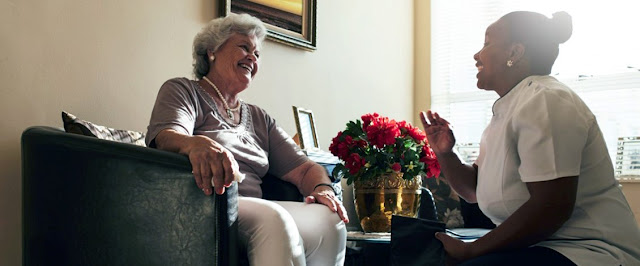
Home Caregiver provides companionship and homecare services to elderly with dementia.

Regular Home Care Services

​Regular in-home care is intended for individuals who require assistance with certain tasks but are able to maintain some independence.  A home caregiver provides help with activities of daily living, such as bathing and dressing, and with household chores like light housecleaning, grocery shopping, and meal preparation. This type of care might also provide medication management and transportation to medical appointments. Regular home care may be appropriate for someone in the early stage of Alzheimer’s disease, but as the disease progresses, more specialized care is needed.

​Dementia Home Care Services

Dementia home care is tailored to the challenges related to the different types of dementia and the changing needs through the progression of the disease. Dementia caregivers are familiar with the stages of the disease, common behaviors, and safety issues related to dementia as well as how to handle erratic moods and behavior. Care plans focus on the specific needs of an individual with dementia, including likes, dislikes, and personality. Dementia care incorporates activities designed to stimulate memory such as looking at family photo albums or listening to music, doing art projects, or reading. Using social media technologies to engage social with friends and family, eating a brain-healthy diet and physical exercise are also ways to help seniors with dementia live at home longer.

In early stage dementia care, the caregiver may need to provide simple memory assistance such as appointment reminders, organization, and money management along with regular home care services.

In middle stage dementia care, it is important for a person with dementia to follow a structured schedule to reduce the stress and anxiety. Individuals may also need increased assistance with dressing and feeding themselves.

In late stage dementia care, individuals typically need 24-hour care to cope with extreme confusion, inability to process information, and difficulty communicating verbally.

Visiting Angels Newton/Canton offers 24-hour home care as well as live-in and live-out homecare for the elderly with dementia. For more homecare information, please call 617-795-2727.