Showing posts with label home health aide. Show all posts

Thursday, January 20, 2022

Round-the-Clock Home Care for Seniors

Most seniors want to age at home for as long as possible. Still, seniors living with chronic health conditions or physical and emotional limitations may need 24-hour living assistance at home. This constant care is likely to be impossible for families to manage and sustain. One option is to move in with a family member. Another option is to move them to an assisted living facility. A third option is full-time or 24-hour in-home care, where professional caregivers provide 24/7 assistance – day and night – in the comfort of their own home.


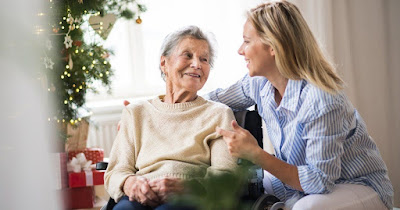
home caregiver chats with elderly woman at home

Why Some Seniors May Need 24-Hour Home Care

Poor eyesight, memory loss, mobility issues, and deteriorating health are some of the things that can make simple everyday tasks challenging and frustrating for older adults. Professional one-on-one caregivers from Visiting Angels can handle these daily responsibilities and offer safety, support, and companionship. Here are some advantages of round-the-clock care:

Safety

Professional home caregivers from Visiting Angels are trained to identify tripping and accident risks and other potential household hazards for seniors. They can act as your eyes and ears to monitor and protect your loved one.

Reliable care at a reasonable cost

Nursing homes and other facilities for the elderly can be costly. Knowing you’re getting reliable, affordable home care is a cost-effective advantage of a 24/7 live-in home care aide.

Support from friends and family

When your loved one is comfortable in their home, they can welcome and entertain family and friends. Visitors can come when they want, unlike nursing homes with permanent visiting hours. This flexibility enables more people to spend quality time with senior loved ones.

Personalized care & lifestyle maintenance

When seniors move into a nursing home, many things change – a new room, surroundings, people, and schedules. All of these transitions can disorient and upset the elderly. In-home caregivers will ensure the care they need without disrupting their routine. A one-on-one support system enables a high level of personal care for seniors. Meals, activities, and other requests can be tailored to your loved one’s preferences. A home caregiver can tackle light everyday chores and keep the house clean and orderly according to your loved one’s wishes. They can also help with day-to-day transportation to and from doctor appointments, grocery store visits, and other out-of-home activities.

Meaningful Companionship

In addition to physical assistance, a 24-hour professional caregiver offers emotional support and one-to-one companion care. A 24-hour home care aide provides seniors with an acquaintance they can rely on and prevent loneliness.

Respite for family caregivers

Many family caregivers can become overwhelmed when supporting an elderly loved one and may benefit from respite care service. 24-hour care service can provide families a brief break by offering a helping hand with household responsibilities. Families can rest easy knowing there is always a considerate, competent professional taking care of their loved ones.

Visiting Angels‘ 24-hour home caregivers provide dedicated and compassionate care for seniors, keeping them safe and comfortable while giving you peace of mind. Take the first step to learn more through a complimentary home care assessment. During a Visiting Angels‘ in-home care assessment, we’ll meet with you and your loved one to determine how 24-hour care can deliver the best outcome. Our Select Your Caregiver® program enables you to choose your loved one’s caregiver(s). Thanks to our in-depth care assessments, we’ll suggest caregiver matches that closely meet your needs, making it easy to select the proper care professional for your loved one. To learn more, please contact us at 617-795-2727.

About Visiting Angels Newton/Canton

Visiting Angels Newton/Canton MA has been providing high-caliber in-home care services for seniors and people with disabilities for over eighteen years. Countless families have benefited from our private duty care, companion care, respite support, dementia and Alzheimer’s care, live-in and 24/7 home care, transitional aid, and home care services in Watertown, Brookline, Natick, Wellesley, Dedham, Needham, Stoughton, Canton, Jamaica Plain, Newton, Norwood, Roslindale, Upper Back Bay, Westwood, and neighboring communities. As a result of our exemplary home care service, Visiting Angels Newton/Canton has won the Best of Home Care Leader in Excellence Award; the Best of Home Care Provider of Choice Award; and the Best of Home Care Employer of Choice Award from the national client satisfaction survey firm, Home Care Pulse, for six years. We have been honored to receive the Boston Globe’s Top Places to Work award for seven years and one of the ten best places to work in Massachusetts in 2021 based on diversity and inclusion. Our dedicated and well-trained caregivers love their HHA jobs and CNA jobs.

Thursday, January 6, 2022

Things You Should Consider Before Changing Professional Caregivers

 Finding the right professional caregiver for your senior loved one often takes time, adjustment, and patience. In the current caregiver crunch, when there are more HHA and CNA caregiver jobs than qualified caregivers, having a compatible and competent caregiver is valuable. But your loved one’s needs may change over time, perhaps due to memory loss, a stroke, or a new illness, and their current caregiver may not be suitable for the assistance needed. You may begin to consider requesting a new caregiver. Navigating a caregiver change requires honest communication between family members and your care manager and articulated expectations from family members. Here are a few things you should consider.


in-home caregiver helping elderly man at home


Key Questions to Ask Before You Change Caregivers

If you are contemplating a caregiver change, first ask yourself if you have given the home caregiver enough time with your loved one.

Take time to talk with your loved one’s professional caregiver and the home care services provider to share your concerns. They may be able to help navigate the issues.

Also, be honest with each other and yourselves. A few fundamental questions to ask yourself and your loved one:

  • What is missing? For example, does your loved one need a different type of care or attention? Is there a personality conflict?
  • What makes you or your loved one uncomfortable?
  • Are there changes the professional caregiver could make? And if so, make a list and share that with the caregiver and provider.

If you can’t resolve the issue with the caregiver and your home care agency. An experienced agency will work to see if they can provide another caregiver more suited to your needs.

Before You Make a Change

If the current provider cannot meet your family’s needs or if your family isn’t comfortable staying with the agency, it is best to do your research before you make a switch.

Some questions you should be prepared to answer:

  • Did you sign a contract or an agreement? If so, read it in full to understand your obligations.
  • Are you required to give notice? If so, how much notice are you required to provide?
  • Are you required to provide written notice?
  • Will there be administrative or exit fees for terminating the contract or agreement?
  • Will a caregiver change affect any insurance that may be covering payments? And if so, how much time will be needed to make those changes?

Also, please keep in mind federal regulations require home health care agencies to be more responsive to their clients or risk losing Medicaid or Medicare funding. While it remains unknown when the changes will be fully implemented, it seems clear that new rules will continue to focus on the rights of the client and families.

Going Forward with the Change

You and your loved one should never feel pressured to stay with a professional home health aide who does not meet your needs or an agency with which you remain uncomfortable.

If you and your loved one decide that changing home care agencies is the best option for everyone, be sure you have vetted a new home care provider before ending your agreement with your current provider. Here are the critical first steps to follow to help you:

  • Provide adequate notice to your current agency. Inform them you will no longer require their services (again, refer above to important notes about the contract you signed).
  • Alert your insurance or bank to ensure payments continue on time, so there is no lag in caregiving.

Remember, too, to be patient as your loved one adjusts to a new professional caregiver. Sometimes, it just takes time. And sometimes, there’s a better fit. Either way, the critical thing to realize is that this is a problem that a superior home care agency like Visiting Angels can solve. Contact us today for a free in-home consultation.

About Visiting Angels Newton/Canton

Visiting Angels Newton/Canton MA has been providing high-caliber in-home care services for seniors and people with disabilities for over eighteen years. Countless families have benefited from our at-home living assistance, companion care, respite support, live-in and 24/7 home care, dementia and Alzheimer’s care, transitional aid, and private duty care services in Natick, Wellesley, Dedham, Needham, Stoughton, Brookline, Canton, Watertown, Jamaica Plain, Newton, Norwood, Roslindale, Upper Back Bay, Westwood, and neighboring communities. As a result of our exemplary home care service, Visiting Angels Newton/Canton has won the Best of Home Care Leader in Excellence Award; the Best of Home Care Provider of Choice Award; and the Best of Home Care Employer of Choice Award from the national client satisfaction survey firm, Home Care Pulse, for six years. We have been honored to receive the Boston Globe’s Top Places to Work award for seven years and one of the ten best places to work in Massachusetts in 2021 based on diversity and inclusion. Our dedicated and well-trained caregivers love their CNA jobs and HHA jobs.

Friday, December 10, 2021

5 Tips for Senior Care During the Holiday Season

The winter holiday season has finally arrived.  As we look forward to spending time with friends and family, shopping, and enjoying our favorite holiday meals, we also experience some shake-up in our routines. These changes are often more acutely felt by the elderly. Being prepared for the holidays will make your job as a family caregiver easier to manage. It will also ensure your loved one stays comfortable and content through what is often a chaotic time. Below are tips that will help you prepare for a joyful and comfortable holiday season:

Encourage Healthy Eating

Indulging in delicious dishes is one of the most sacred holiday traditions. Not only do these nostalgic flavors bring back marvelous memories, but they also bring the family together in a shared experience that shouldn’t be denied to seniors.

It’s essential to keep an eye on balance throughout the holidays. Holiday meals are special occasions to look forward to, not to stretch out for days on end. In between those rich holiday meals, make sure your loved one has something light and nutritious within reach. They’ll feel better physically and have an easier time sticking to their doctor’s dietary guidelines.

woman sharing a laugh with her elderly loved one


Make Exercising a Holiday Ritual

The cooler winter months often lead us toward a more sedentary lifestyle, even as our calorie intake increases thanks to the holidays. While it’s normal to want to spend more cozy time indoors as the weather cools off, less movement can make us feel more sluggish. It can also trigger a spell of the holiday blues.

Ensure your loved one benefits from exercise by making fun physical activities part of their holiday experience. For example, you could have the whole family bundle up and go for a brisk walk around the neighborhood after each family meal. Or, you can help your loved one get in the holiday spirit by doing a few laps around the mall while window shopping. Spending time in nature and watching the leaves change colors is also a great way to enjoy being active.

Manage Gift-Related Financial Stress

Many seniors love to dote on their children and grandchildren with holiday gifts. Unfortunately, those on a fixed income often feel the financial strain as they struggle with the desire to be generous within their limited means. To minimize stress for all your family members, including seniors, suggest opting for a “Secret Santa” or “white elephant” gift exchange so everyone can experience the joy of giving without going over budget.

Prevent Falls While Visiting Family

The last thing you want is for your loved one’s holiday joy to be marred by a dangerous fall. If they visit other family members this season, take time to practice fall prevention to make the home safe and accessible. This could include removing rugs that present a fall hazard and installing nightlights if the senior stays overnight.

Take a Break

The holidays can be a stressful, chaotic time, especially for those who are constantly on the go. As a family caregiver, it’s crucial to remain aware of your stress levels and take time off from your caregiving duties as needed.

One of the best ways to make your health and well-being a priority during this busy season is to book respite care visits from a professional elder care provider. Being proactive about meeting your own self-care needs will make this time of year much more enjoyable and give you the energy required to provide the quality of care your loved one deserves.

For more information about in-home elder care services, please contact Visiting Angels Newton/Canton at 617-795-2727.


About Visiting Angels Newton/Canton

Visiting Angels Newton/Canton MA has been providing high-caliber in-home care services for seniors and people with disabilities for over eighteen years. Countless families have benefited from our at-home living assistance, companion care, respite support, live-in and 24/7 home care, dementia and Alzheimer’s care, transitional aid, and private duty care services in Natick, Wellesley, Dedham, Needham, Stoughton, Brookline, Canton, Watertown, Jamaica Plain, Newton, Norwood, Roslindale, Upper Back Bay, Westwood, and neighboring communities. As a result of our exemplary home care service, Visiting Angels Newton/Canton has won the Best of Home Care Leader in Excellence Award; the Best of Home Care Provider of Choice Award; and the Best of Home Care Employer of Choice Award from the national client satisfaction survey firm, Home Care Pulse, for six years. We have been honored to receive the Boston Globe’s Top Places to Work award for seven years and one of the 10 best places to work in Massachusetts in 2021 based on diversity and inclusion.  Our dedicated and well-trained caregivers love their CNA jobs and HHA jobs.

Wednesday, March 3, 2021

Helping Senior Loved Ones with Dementia

If you provide care for elderly loved ones with dementia, you most likely have witnessed their battle with memory loss and other cognitive limitations. It can be heart-wrenching to hear them forget family members and friends, fail to recall recent events, or talk about deceased loved ones who they believe are still alive.

You may be feeling helpless and discouraged, but there are strategies you can use to reduce stress, circumvent confusion, and maintain a healthy relationship with your aging loved one.


5 Ways to Cope with Dementia and Confusion

Dementia can cause your elderly loved ones to say outlandish things or become befuddled when out in public. You may feel embarrassed as they clumsily interact with neighbors, talk to store owners, or even chat with strangers.

Dealing with loved ones exhibiting dementia-related behavior, in private and public, can be disturbing. The following tips can help you manage tricky interactions caused by your senior’s illness:

Step into their reality

Seniors with dementia can find it hard to keep track of reality and memory or imagination. If you pull seniors with dementia into the “real world” by correcting them, you can sometimes cause more confusion, stress, fear, or even anger — which only worsens their symptoms.

Experts recommend, whenever possible, that you affirm and join your loved one’s reality. If your senior occasionally speaks as though they live in the past, keep the conversation going without correcting them as long as it is not causing them harm. For example, if your senior thinks it’s Saturday, but it’s Wednesday, there is no need to correct them – just let it go.

Use distractions and diversions

Experts encourage using situational distractions to help people with dementia stay calm and avoid worsening symptoms. For example, if telling your senior you are taking them for a medical checkup causes distress, you may tell them, instead, that you are going on a trip to the park and will stop for a doctor’s appointment on your way back.

You may also choose to distract your senior from topics that cause stress or if you find they are stuck repeating themselves. Changing the subject to the weather or asking them to assist with a simple task can help diffuse the situation. Assistance folding laundry or watering plants can help to shift their focus.

Some people may feel guilty about using therapeutic distractions or diversions, and that is perfectly normal. Just remember the goal is to make your loved one feel comfortable and find a balance that works for both of you.

Use brief explanations and gentle corrections

Sometimes, you may have to correct a confused senior. In situations like this, do so as gently and briefly as possible. Reduce confusion and other negative emotions by phrasing your corrections as suggestions. For example, you could say, “Why don’t we take a walk together?” instead of, “I can’t let you go out alone because you’ll get lost or fall.”

Be sure to use simple words and phrases that your loved one will recognize. Physical reminders, such as photographs, can also help gently reorient a senior with dementia when necessary.

Respond to feelings, not words

Ask yourself what emotion might be behind your loved one’s words. If they are lashing out, perhaps it’s because they are afraid. In this case, you can reassure them that everything is okay and perhaps offer them a hug or hold their hand. It is important to respond calmly at all times.

Take care of yourself

Although following these tips can help reduce stress for you and your senior, caring for a senior with dementia can still be very demanding. Remember that taking care of yourself is essential to avoid caregiver burnout. If you find yourself hurt by comments your senior has made, try to remind yourself they aren’t doing it on purpose.

If you need additional support in caring for your elderly loved one with Alzheimer’s disease, dementia, or memory loss problems, consider hiring a Visiting Angels caregiver. We have partnered with leading dementia specialists to develop a series of dementia care certification programs. Basic dementia care training is available to all Visiting Angels caregivers, and many home health aides are certified in advanced dementia care protocols. Our Visiting Angels care coordinators are available to discuss your loved one’s needs during a free care consultation. Contact us today!

About Visiting Angels Newton/Canton

Visiting Angels Newton/Canton MA is an award-winning local home care agency providing high-caliber in-home care services to the elderly and people with disabilities. Countless families have benefited from our in-home senior care, respite care, elder companion care, live-in and 24-hour care, dementia and Alzheimer's care, transitional aid, and at-home living assistance services in Stoughton, Brookline, Canton, Dedham, Hyde Park, Jamaica Plain, Natick, Needham, Newton, Norwood, Roslindale, Upper Back Bay, Watertown, Wellesley, West Roxbury, Westwood, and neighboring communities. The non-medical care provided by Visiting Angels Newton/Canton can make a significant impact on your loved one's happiness and quality of life.

Tuesday, October 13, 2020

Senior Safety Tips for Public Settings During Coronavirus Pandemic

As communities reopen across the country, many seniors are looking forward to going back to the hair salon or barber, the grocery store, a relative’s house, or a favorite local restaurant. At the same time, many family caregivers are trying to determine how to protect their senior loved ones from COVID-19 when they are outside the home.

Here are a few senior safety tips for public settings — and some information on how professional caregivers can assist you in protecting your senior during the COVID-19 pandemic.

Visiting the hair salon or barber

Hair salons and barbershops should follow all public health regulations, including capacity restrictions, staff mask-wearing policies, cleanliness and sanitization practices, and social distancing guidelines. You or your senior should call the establishment in advance of the appointment to ensure the staff is following the required safety protocols.

Your senior should wear a mask at all times when inside the salon and should sanitize or wash his or her hands frequently, especially after touching surfaces such as counters, credit card machines, and door handles. It’s also a good idea for seniors to keep their distance from others and minimize time spent inside by waiting in the car until it is time to start the appointment.

If necessary, an in-home personal caregiver can accompany your senior to their appointment and remind him or her to follow the establishment’s safety rules. Your senior’s caregiver can also make sure your loved one remembers to bring essential items, such as a mask and a small bottle of hand sanitizer. 

elderly man eating at a restaurant during COVID-19


Shopping at the grocery store or pharmacy

If your senior needs to visit the grocery store or pharmacy, they must wear a mask and sanitize their hands as critical safety steps. Your senior should avoid close contact with other shoppers in store aisles and checkout lines. Be sure to stress the importance of following signs and markings in the store that promote social distancing.

It may also help to make a list of items your senior needs before leaving home to reduce browsing and minimize the amount of time spent in the store. If he or she can avoid going inside the store in the first place, that is better. Consider using the drive-thru pharmacy, grocery pickup, or home delivery services whenever possible.

In addition to meal planning/preparation and providing medication reminders, home health aides can assist with shopping — either by taking your senior to the store or going to the store on his or her behalf.

Visiting a friend or relative’s house

Social interaction has many emotional and mental health benefits, particularly for seniors who were isolated from loved ones during the height of the pandemic. However, resuming social visits to a friend or relative’s house should be carefully considered based on personal risk factors, the community transmission rate, and comfort level.

You might also consider the following:

  • Will your loved one be able to social distance?
  • Will all participants follow public health guidelines?
  • Is the visit indoors or outdoors?
  • Will there be any shared food or beverages?
  • How many people will be included?

If your senior wants to social distance even though others don’t, support their decision to postpone in-person visits and offer to help them find alternative ways to connect with family or friends. A trained in-home caregiver can also assist in communicating with loved ones while providing companionship to the senior to alleviate boredom and loneliness.

Dining at a restaurant

You can help keep your senior safe by contacting the restaurant in advance to find out what protective measures are implemented and making sure they follow all recommended guidelines.

Close contact with large numbers of people in indoor spaces increases the risk of COVID-19 spread, according to the U.S. Centers for Disease Control and Prevention. This means outdoor dining with plenty of space between tables during off-peak hours would be less risky than dining indoors at a crowded restaurant with little social distancing.

If your senior is craving a meal from a favorite local restaurant, a home care aide could accompany your older loved one and make sure he or she stays safe — or order and pick up take out.

If you’re looking for some help keeping your senior safe as he or she resumes public activities during COVID-19, Visiting Angels caregivers are here for you. Our Visiting Angels case managers are available to discuss your loved one’s needs during a free in-home care consultation.

If you’re interested in more information about how in-home care can help your senior loved one, contact us today.

Safe, High-Quality Care the Elderly Deserve

Visiting Angels’ priority remains the health and safety of its caregivers and the clients they serve every day. As an award-winning home care agency in Greater Boston, Visiting Angels Newton/Canton follows and adheres to the latest health and safety guidelines issued by the U.S. Centers for Disease Control and Prevention (CDC). Despite the challenges associated with COVID-19, in-home caregivers fulfill Visiting Angels’ mission of partnering with families to provide essential at home living assistance for older adults.

Visiting Angels’ in-home caregivers continue to be homecare heroes on the frontlines, taking necessary steps to protect elderly loved ones and themselves by doing whatever it takes to prevent the spread of COVID-19.


Wednesday, July 22, 2020

Is In-Home Care Better Than Nursing Home Care?

Determining the best overall care for an elderly loved one can be an overwhelming decision. It begins with assessing the pros and cons of different senior care options and weighing relevant concerns such as personal preferences, financial considerations, and health. You may even experience feelings of guilt and doubt that can make decision-making more challenging.

home caregiver helping an elderly woman get up

As you consider what to do next and where to turn, the question of whether in-home care is better than nursing home care or an assisted living facility could arise. Here are seven benefits of in-home care:

Familiar surroundings

Perhaps the most apparent benefit of in-home care is that it allows older adults to remain in their homes, which limits disruptions associated with relocation and enables them to maintain their routines. Sudden changes in surroundings or habits can be particularly distressing for older adults with dementia or Alzheimer’s disease.

Customized care program

Whether your senior needs part-time care during specific hours of the day or 24/7 home care assistance, in-home care offers a variety of flexible scheduling options and a complete “menu of services” that can be customized to individual needs. Your loved one will be matched with a compatible home caregiver who can assist with specific tasks during the hours when care is needed.

Lower cost

In-home care is often less expensive than a nursing home or assisted living facility. Although many high-quality senior facilities offer comprehensive services, this “one-size-fits-all” model may result in your loved one paying for amenities that aren’t needed. Care options provided by in-home personal care providers can save many families money by paying only for required services on the days and times they need them most — without compromising on the quality and availability of care.

Additionally, remaining at home eliminates moving or storage costs that may come with a move to an older adult facility.

The personal relationship with a caregiver

In-home caregivers offer one-on-one care, which helps them develop a more personal relationship with clients. This level of personalized attention enables caregivers to learn about your senior loved one’s likes, dislikes, and interests. This approach also helps caregivers anticipate needs, communicate effectively, provide companionship, and identify issues that should be brought to your attention.

Safety/health benefits

Unfortunately, nursing homes have been among the hardest hit during the coronavirus (COVID-19) pandemic. Opting for home-based senior care may reduce the chance your loved one catches a serious illness by limiting their exposure to other nursing home residents, caregivers, and staff members.

Privacy

Nursing home residents share outdoor spaces, visiting rooms, dining facilities, recreation spaces — and sometimes even a bedroom and bathroom — with other residents. In-home personal care allows your loved one to maintain their privacy and have access to familiar spaces on their terms and timeframes. Although a caregiver will be invited into their home, our personal care professionals are trained to respect your loved one’s privacy by providing assistance and companionship when needed and taking a step back when requested.

Encourages independence

Your loved one may require limited assistance with specific tasks. In that case, a move to a nursing home could force them to give up their cherished independence sooner than necessary. For example, your loved one may need help with grocery shopping. However, they still enjoy planning and preparing meals without assistance. Your loved one may not have the option to continue planning and preparing meals at a nursing home. An in-home caregiver allows your loved one to continue performing meal planning and preparation tasks independently while helping them receive assistance in other areas.

As a family caregiver, your loved one’s well-being is a top priority. Visiting Angel’s professional caregivers provide outstanding in-home care services for older adults – and peace of mind to family members. If you are considering home care for your loved one, our Visiting Angels care coordinators would be happy to discuss your loved one’s needs during a free in-home care consultation.

About Visiting Angels Newton/Canton:

Visiting Angels Newton/Canton MA is an award-winning local home care agency providing high caliber in-home care services to the elderly and people with disabilities. Countless families have benefited from our home Alzheimer’s care, dementia care, 24 hour care, live-in care, companion care, respite care, transitional aid, and in-home elder care services in Watertown, Brookline, Stoughton, Canton, Dedham, Needham, Westwood, Norwood, Natick, Wellesley, Newton, Chestnut Hill, Roslindale, and nearby towns. While non-medical in nature, the care provided by Visiting Angels Newton/Canton can make a significant impact on your loved one’s happiness and quality of life.


Thursday, November 14, 2019

When Your Loved One Rejects Home Care


Maybe you’ve been concerned about your mom recently. As she ages, you’re noticing a few worrisome signs that her needs at home are about to evolve beyond her independence. Sure, you’d love to stop by the house more frequently to help, but with a career and family schedule, it’s nearly impossible for you to take on this massive responsibility. It's a typical scenario in families, and it usually results in uprooting a senior to a nursing home or assisted living facility or retaining professional home care.

However, people can be stubborn, especially parents who may be insecure about a type of "role reversal" happening. Your parent not only refuses to leave home, but Mom or Dad is rejecting the very idea of a professional caregiver.

So how do you get them on board when they want to stay home but don’t want help from a professional caregiver? Here are five ways to find a caregiving compromise.

Elderly woman deep in thought

Talk Through Their Fears — and Yours

It’s not easy for your parents to admit they need help. The thought of having another person in the home to help them perform tasks that used to be routine could make them quite uncomfortable. Of course, over time, that professional home health aide can become a close friend and partner, but it may take a while and trust-building.

Work through these fears with your parents instead of forcing a solution. When an adult child becomes too controlling, the resistance from your parents is bound to increase. A 2004 study from SUNY Albany found this to be accurate, stating that participants were ambivalent about receiving care and “use a variety of strategies to deal with their ambivalent feelings, such as minimizing the help they receive, ignoring or resisting children’s attempts to control.”

Though you may be frustrated by rejection and reticence, put yourself in their shoes. Be understanding, and once your parent feels understood, explain your point of view. Remember not to be patronizing or disrespectful, but share your genuine concerns about being able to stay home safely.

More Dancing, Less Wrestling

An expert in geriatric communication and family relationships, David Solie, wrote a book about the best ways to navigate these difficult conversations. It was called “How to Say It to Seniors: Closing the Communication Gap with Our Elders.” Solie recommends the partnership approach and advocates for adult children to “put control on the table” rather than commandeering the process. He believes conversations about care should be “more dancing, less wrestling.”

To that end, he offers many tools to talk in more concrete, visual ways about the current situation and the proposed solution. His "dance cards" provide go-to strategies on topics like resetting expectations and minding the gap, and his caregiver “mind maps” allow a caregiver to lay out in detail all the aspects of care to be considered. You could also keep a journal of your parents’ changing in-home senior care needs. All of these checklists and resources are especially helpful in getting buy-in from siblings as well, as your parents may not be the only ones opposed to bringing in-home care.

Consider the Risks

Staying home without any support can be risky. For one family, an aging spouse refused any at-home living assistance. The family has been worried about his waning mobility. Ultimately, he suffered a fall, which led to a hospitalization and, unfortunately, his passing — as he was not able to recover from the injuries he sustained. While no family can be fully prepared for a fall or other type of sudden health event, there are ways to prevent injuries and incidents that lead to such devastating outcomes — and having a professional caregiver as a presence in the home is one of them.

Of course, not every fall results in such a tragic outcome; however, the road to recovery can be a turbulent one for a senior who has fallen. Along with doubling the risk of falling again after falling just once, the sheer financial impact can be crippling.

All of this is to say, the risk of leaving Mom or Dad alone when he or she needs help isn't worth it, and you must discuss the risks with your parent.

Work With a Mediator

You’ve explored every avenue of persuasion, using all the logic at your disposal, but it may be there is just no convincing Mom or Dad that this is the best option. That’s when bringing in a neutral third party to moderate the conversation could make a difference in the outcome. Sometimes your parents need to hear the options, risks, benefits, and challenges presented by someone who is not as emotionally invested as you are. A mediator may also help lessen the guilt burden many parents put on their children for considering home care. AARP offers these resources for finding a mediator, should this approach work best for your family.

Present Options and Let Them Choose

Empower your parents to decide on home care by gathering information on some providers. Ask for their input: what do they value in a home care company? What’s the budget? Talk about what a professional caregiver can do that they maybe never considered as an option: like providing companionship, or helping with housework and transportation to doctor’s appointments. Once you’ve gathered information on a few options, sit down together to discuss the pros and cons.

Remember: even as you partner with a professional caregiver, you will still play an essential role as coordinator and advocate. Your opinion on a trusted in-home caregiver is equally valuable.

Need more advice on building consensus on home care among the family? Visiting Angels Newton/Canton can help. Contact us today at 617-795-2727.

About Visiting Angels Newton/Canton:
Visiting Angels Newton/Canton MA is an award-winning local home care agency providing high caliber in-home care services to the elderly and people with disabilities. Countless families have benefited from our Alzheimer's care, dementia home care, companion care, senior care, respite support, transitional aid, and at home living assistance services in Westwood, Norwood, Brookline, Watertown, Needham, Dedham, Canton, Stoughton, Natick, Wellesley, Newton, Chestnut Hill, Roslindale, and nearby towns.

We are honored to have been awarded Top Places to Work by the Boston Globe for five years. We have also earned the Best of Home Care – Leader in Excellence, Trusted Provider, Best of Home Care Provider, and Best of Home Care Employer by Home Care Pulse. We are proudly accredited by the Home Care Alliance of Massachusetts.

While non-medical in nature, the care provided by Visiting Angels Newton/Canton can make a significant impact on your loved one's happiness and quality of life. Call us at 617-795-2727 for information.


Thursday, October 17, 2019

Finding a Compatible Home Care Provider

Finding the right home care provider for your spouse, parent, or grandparent can be difficult. Thanks to our Select Your Caregiver® program, Visiting Angels® makes it easy for care recipients and their families to find a compatible home care provider. We’ve been matching clients with qualified, skilled, and compassionate caregivers for more than two decades. We know what it takes to find the right fit, and we understand how important and impactful your choice of caregiver will be.

If you’re currently looking for a home care provider and you’re unsure what to look for in a caregiver, don’t worry. By focusing on the following three qualities, you will quickly narrow down the list of potential caregivers.

Home health aides for Boston, Dover, Weston, Natick, Wellesley, Canton, Newton, Brookline, Watertown, Newton, Dedham, Needham, Westwood, Norwood


1. Caregiving Skills & Experience

Home care is a wide-ranging industry, encompassing many different types of care services. On one end of the spectrum is companion care, which provides aging and disabled individuals with a helping hand for necessary, day-to-day activities. On the other end, are various types of specialized care for individuals with physical and cognitive disabilities.

If your loved one only requires essential in-home living assistance — help running errands, making meals, doing laundry — a companion care provider will be suitable. Other types of care will require a caregiver with specialized skills and experience. This includes physical assistance, as well as specialized care services such as Alzheimer’s care and dementia care.

Before meeting with in-home care agencies, it’s a good idea to draw up a list of tasks that your loved one will need from his or her caregiver. Consider researching caregiving activities online so that you don’t forget anything. This will also allow you to familiarize yourself with which types of caregivers provide which kinds of services.

When meeting with potential in-home care agencies, it is helpful to review this list with them in detail. Ask them whether they provide each of the services your loved one will need. Also, check whether the caregivers are CNA or HHA-certified caregivers; they have training or experience providing these services to seniors. Finally, make sure that they are adequately licensed for whatever level of care your loved one requires.

2. Choose a Home Care Aide with Personality

When hiring a home care provider, a caregiver’s personality can be as important as his or her professional skill set. On a basic level, this will ensure that your loved one trusts his or her caregiver. Without this trust, high-quality home care service can be unhelpful.

On a deeper level, the right personality fit can be the difference between substandard care and the right caregiver. Your loved one will spend several hours a week with their caregiver, so it’s vital that a strong relationship is established. When personalities clash, home care visits are a chore for both parties. However, with the right fit, a caregiver can feel like a new member of the family.

As you meet with caregivers, it’s crucial that you and your loved one get a feel for each caregiver as a person. Will your loved one feel comfortable receiving care from this individual? Will your loved one enjoy conversations or quiet time in this person’s presence? Will you and your family feel at ease with this caregiver looking after your loved one? Trust your instincts and make sure that you, your loved one, and your family are happy with the final decision.

3. Caregiver Availability & Scheduling

The third important factor when choosing a compatible home care provider is scheduling and availability. While some seniors only require a few hours of care every week, others require assistance on a full-time basis or even 24-hour care. The more intensive your loved one’s caregiving needs, the more challenging it can be to find a caregiver with suitable availability.

At the same time, many seniors are set in their day-to-day routines and preferences. It’s important that these routines are maintained or accommodated when scheduling home care visits. If your loved one enjoys sleeping in, early morning visits could be disruptive. If they enjoy afternoon walks, you’ll want to make sure that a caregiver is there to accompany them.

While scheduling and availability are important in a home caregiver, sometimes it’s worth making the sacrifice for the right caregiver. If, for example, you’ve found a caregiver with the ideal skill set and personality, but your loved one would need to take their daily walk an hour later each day, a slight change in your loved one’s routine may be worth it to get the caregiver you feel is the right fit.

Are you looking for qualified home care providers in your area? Contact us today for a free in-home consultation.

Thursday, September 19, 2019

What Skills Matter Most for Personal Care?

If you have a loved one who requires in-home care, you will want to determine which type of services they need. The two most common types are companion care and personal care. Companion care focuses on activities like errands, meal preparation, and light housekeeping. Personal care covers these tasks, but also includes activities that require physical assistance, such as dressing and bathing.

Both types of services require different skills from home caregivers. However, the physical aspects of personal care can be quite skill-intensive. Also, individual care recipients often suffer from chronic health conditions or a form of disability, further highlighting the importance of having experienced caregivers.

So if you’re looking for a personal caregiver to assist a loved one, here are the skills that matter most.

private duty care provider in Boston, Newton, Canton, Wellesley, Natick, Watertown, Brookline, Westwood, Norwood, Needham and Dedham


Skills to Look for in Personal Care Providers

Physical Assistance
Personal care or private duty care is typically distinguished from companion care by tasks involving physical assistance. These include things like dressing and grooming, bathing and toileting, mobility assistance, or helping an individual from one position to another.
Any time that a caregiver provides physical assistance, they need to ensure the client’s safety and comfort: This requires more skill than many people realize.

So if you’re hiring personal care services, it’s crucial that you find a home care provider who can keep your loved one safe and comfortable.

Cleanliness & Hygiene
Many individuals who receive personal care are at increased risk of bacterial or viral infections. 

If an infection occurs, many of them are also at increased risk of hospitalization.
Caregivers can help prevent infections in elderly adults by maintaining high standards of cleanliness and hygiene. They take care to frequently clean and sanitize their hands. They help clients maintain high standards of personal hygiene by assisting in their bathing, dressing, and laundry needs.

Personal care is only one part of preventing infections among care recipients. However, it’s vital that you choose a home care aide who understands the role of cleanliness and hygiene.

Knowledge & Awareness
If you speak with professional caregivers or care administrators, they’ll tell you how necessary experience is to care providers.

One area where this knowledge proves useful is client monitoring. As caregivers tend to their clients, they monitor for changes in behavior, cognition, coordination, strength, emotional wellness, and other areas. This way, they can detect signs of decline early and alert the client or the client’s family, and case manager promptly. Caregivers may also keep care logs upon the client’s family’s request.

Many of these changes are subtle or gradual, so they go unnoticed without a caregiver present. However, with a knowledgeable and observant personal care provider, they’re less likely to go undetected.

Well-informed caregivers also know how to respond in unusual and urgent situations. Many caregivers have the fundamental skills for day-to-day caregiving, but when the unexpected happens, you want an experienced and educated professional.

Communication & Compassion
The best caregivers have excellent interpersonal skills, and personal care providers are no exception.

Think about some of the activities that personal care entails. Few people feel comfortable dressing, bathing, or going to the bathroom with the assistance of another person. It takes an extraordinary level of respect, understanding, and care to put clients at ease during these activities. The best personal care providers possess these qualities in spades.
Skilled caregivers are also capable communicators, both with their clients and their clients’ families.

Caregivers who communicate poorly will often leave clients confused about why specific care tasks are being performed or feeling like their wishes and preferences aren’t being considered. Proper caregiver-client communication can resolve these issues, improving quality of care.

It’s also important that caregivers communicate with family members of their clients. Without adequate communication, problems can go unreported, important care tasks can go unperformed (or get performed twice), and trust between care providers and family members might erode. Active communication will ensure that everyone is on the same page and working toward the same goals.

Visiting Angels Newton/Canton has an outstanding team of caregivers who work tirelessly to provide quality care to our clients. Contact us today at 617-795-2727 for a free in-home consultation!